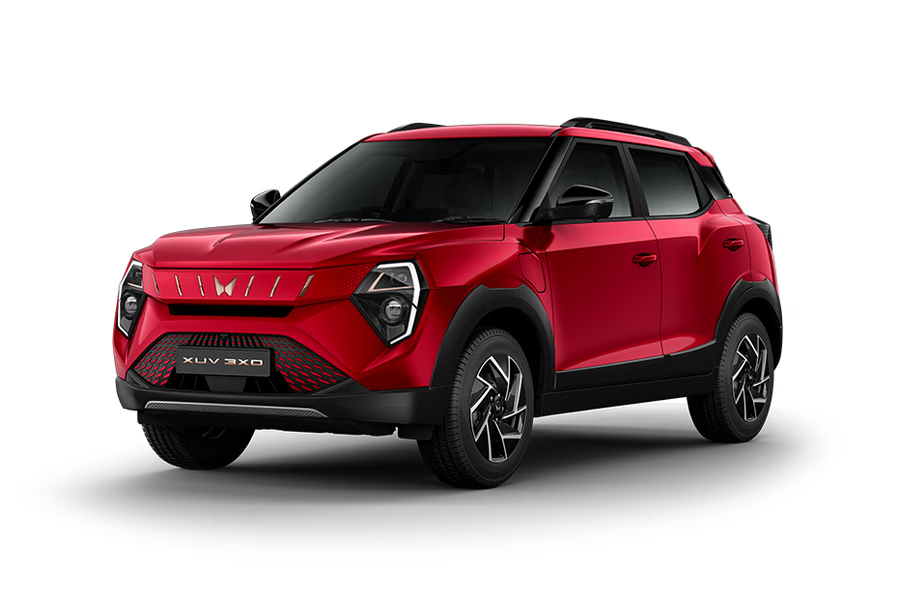
The Volkswagen Taigun and Skoda Kushaq are two closely related SUVs in India's competitive midsize SUV segment. Both models are based on the same MQB-A0-IN platform and share their engine options, transmission choices and several mechanical components.
Although they have similar proportions, their exterior styling and design details give them slightly different road presence. The Volkswagen Taigun follows a sporty European-inspired SUV design, while the Skoda Kushaq features a distinctive grille and a more traditional SUV cars appearance.
For buyers comparing these two SUVs, dimensions play an important role in understanding their exterior size, cabin packaging, luggage capacity and everyday practicality.
In this comparison, we look at the Volkswagen Taigun vs Skoda Kushaq dimensions, including length, width, height, wheelbase, ground clearance and boot space, to find out which SUV offers more space and practical advantages.
Volkswagen Taigun vs Skoda Kushaq: Dimensions Comparison
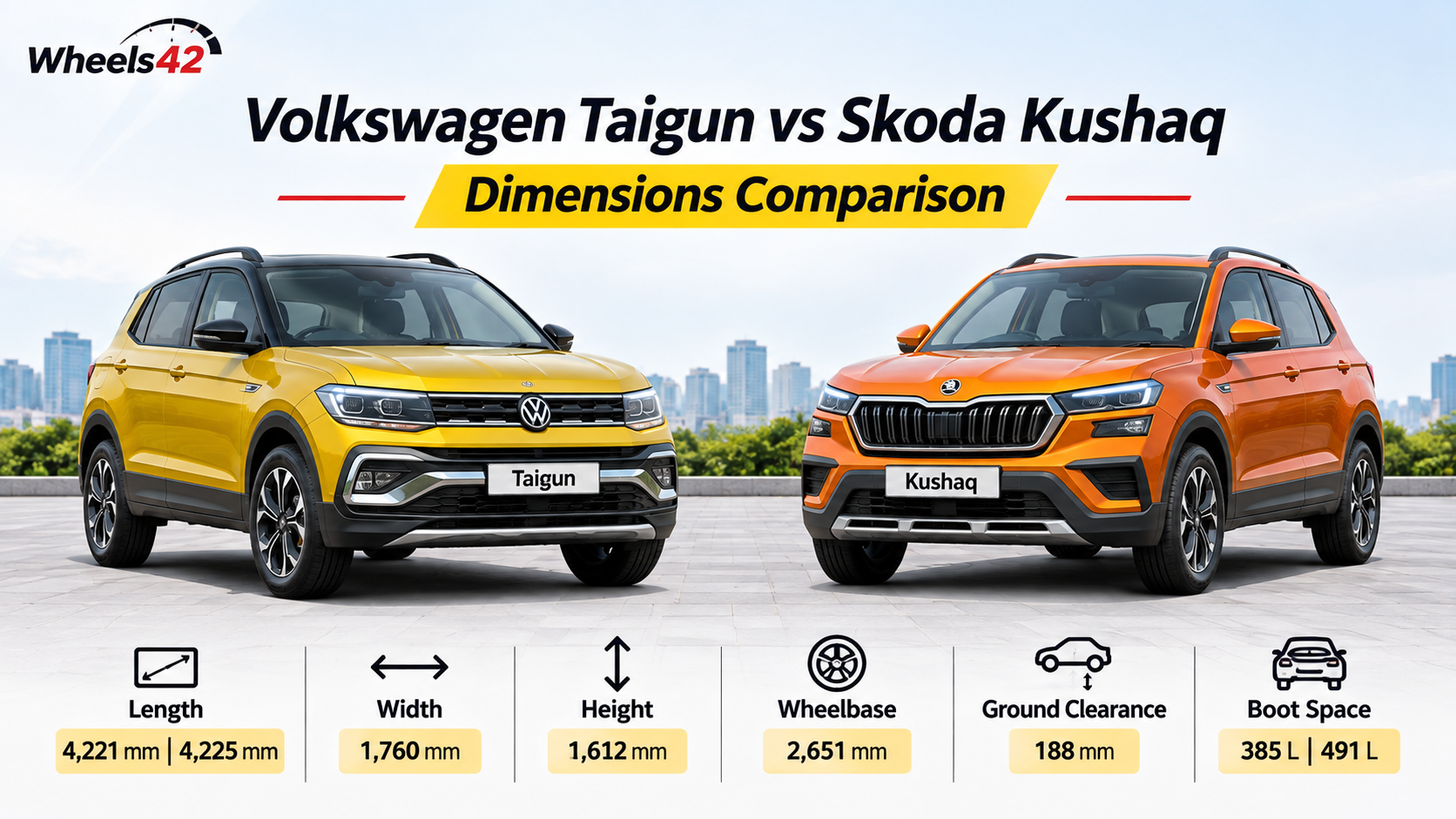
Both SUVs have almost identical exterior dimensions, but there are small differences in their overall length and luggage capacity.
The Volkswagen Taigun measures 4,221 mm in length, 1,760 mm in width and 1,612 mm in height. It comes with a wheelbase of 2,651 mm and offers 385 litres of boot space.
The updated Skoda Kushaq measures approximately 4,225 mm in length, 1,760 mm in width and 1,612 mm in height. It also has a 2,651 mm wheelbase, while its updated boot capacity is 491 litres.
The Kushaq is therefore slightly longer, while both SUVs offer identical width, height and wheelbase figures.
1. Volkswagen Taigun vs Skoda Kushaq: Length
Overall length is one of the first measurements buyers consider when comparing two SUVs. It influences the vehicle's exterior proportions, parking convenience and packaging.
The Volkswagen Taigun measures 4,221 mm in length, whereas the Skoda Kushaq measures approximately 4,225 mm.
This gives the Kushaq a 4 mm advantage over the Taigun.
However, this difference is extremely small and is unlikely to create a noticeable difference in everyday driving or parking.
Both SUVs have compact dimensions for the segment, making them suitable for urban roads, narrow streets and highway journeys.
The Taigun features a sporty front profile with a distinctive grille and sharp body lines. The Kushaq follows Skoda's design language, with a prominent front grille and relatively upright SUV styling.
Winner: Skoda Kushaq, with a marginal 4 mm advantage in length.
2. Volkswagen Taigun vs Skoda Kushaq: Width
Width plays an important role in the overall road presence of an SUV. It can also influence available cabin shoulder room, although actual passenger comfort depends on the interior layout and seat design.
Both the Volkswagen Taigun and Skoda Kushaq measure 1,760 mm in width.
There is no difference between the two SUVs in this measurement.
Their similar widths reflect their shared platform and closely related engineering.
For buyers, neither SUV has a dimensional advantage in overall body width. Actual cabin comfort should be compared through seating position, seat cushioning and available shoulder room.
Winner: Tie, as both SUVs have the same width.
3. Volkswagen Taigun vs Skoda Kushaq: Height
The height of an SUV influences its exterior proportions, roofline and overall appearance.
Both the Volkswagen Taigun and Skoda Kushaq measure 1,612 mm in height.
Their identical height figures give them similar overall proportions.
The Taigun features a sporty appearance with its distinctive lighting and exterior styling, while the Kushaq has a more traditional SUV-inspired design.
Although their exterior heights are identical, interior headroom can still vary depending on seat positioning, roof lining and cabin packaging.
For buyers who regularly travel with passengers in the rear seats, checking actual headroom and seating comfort during a test drive is recommended.
Winner: Tie, as both SUVs have identical height measurements.
4. Volkswagen Taigun vs Skoda Kushaq: Wheelbase
Wheelbase refers to the distance between the centre of the front and rear wheels. It is an important measurement because it influences vehicle proportions, stability and cabin packaging.
Both SUVs offer a wheelbase of 2,651 mm.
This means neither model has an advantage in terms of wheelbase.
A longer wheelbase can provide additional opportunities for passenger-space packaging, but it does not automatically guarantee more rear legroom.
The actual cabin experience also depends on the front-seat design, rear-seat positioning, floor layout and available knee room.
Since both SUVs share the same wheelbase, their basic proportions are very similar.
Winner: Tie, with both models offering a 2,651 mm wheelbase.
5. Volkswagen Taigun vs Skoda Kushaq: Ground Clearance
Ground clearance is particularly important for Indian driving conditions, where vehicles regularly encounter speed breakers, potholes and uneven road surfaces.
The Volkswagen Taigun offers approximately 188 mm of ground clearance. The updated Skoda Kushaq also offers a maximum ground clearance of 188 mm.
Both SUVs therefore provide similar underbody clearance on paper.
This measurement can be useful when navigating ordinary road imperfections and larger speed breakers. However, actual underbody clearance can change depending on passenger load, luggage and suspension movement.
Drivers should also consider approach and departure angles when evaluating a vehicle's ability to handle rough roads.
Winner: Tie, with both SUVs offering approximately 188 mm of ground clearance.
6. Volkswagen Taigun vs Skoda Kushaq: Boot Space
Boot capacity is an important consideration for buyers who regularly travel with family or carry luggage during long journeys.
The Volkswagen Taigun offers 385 litres of boot space, which can be expanded to 1,405 litres by folding the rear seats.
The updated Skoda Kushaq offers 491 litres of boot capacity, expandable to 1,405 litres.
This gives the Kushaq a 106-litre advantage over the Taigun in standard boot capacity.
The additional luggage space can be useful for carrying suitcases, shopping bags and travel essentials.
The Kushaq's updated boot capacity is one of the most significant practical differences between these two SUVs.
However, the usable luggage area also depends on its shape, loading height and the size of individual bags.
Winner: Skoda Kushaq, with 106 litres more boot space.
7. Which SUV Offers Better Road Presence?
Despite sharing their basic platform and dimensions, the Volkswagen Taigun and Skoda Kushaq have different exterior styling approaches.
The Volkswagen Taigun features a sporty design with sharp headlamps, a prominent grille, muscular bumper styling and distinctive body lines.
The Skoda Kushaq follows a more upright SUV design. Its updated version features a redesigned front grille, new LED lighting elements, connected rear lighting and revised exterior details.
The differences in styling make both SUVs visually distinct despite their nearly identical proportions.
Buyers who prefer a sportier European-inspired appearance may find the Taigun more appealing, while those who prefer Skoda's updated design language may favour the Kushaq.
8. Which SUV Is More Practical for Family Use?
Both SUVs offer five-seat configurations and similar exterior dimensions.
Their identical wheelbase, width and height figures mean that the basic dimensional packaging is closely matched.
However, the updated Kushaq has an advantage in luggage capacity, offering 491 litres compared with the Taigun's 385 litres.
The Kushaq also introduces additional comfort features in its updated version, including a rear-seat massage function in selected variants and a panoramic sunroof.
The Taigun remains a practical option for buyers who prefer its styling, driving character and familiar feature package.
For families who regularly travel with multiple suitcases, the Kushaq's larger boot could be a useful advantage.
9. Volkswagen Taigun vs Skoda Kushaq: Complete Dimensions Comparison
|
Dimensions
|
Volkswagen Taigun
|
Skoda Kushaq
|
|
Length
|
4,221 mm
|
4,225 mm
|
|
Width
|
1,760 mm
|
1,760 mm
|
|
Height
|
1,612 mm
|
1,612 mm
|
|
Wheelbase
|
2,651 mm
|
2,651 mm
|
|
Ground Clearance
|
188 mm
|
188 mm
|
|
Boot Space
|
385 litres
|
491 litres
|
|
Seating Capacity
|
5
|
5
|
|
Maximum Boot Space
|
1,405 litres
|
1,405 litres
|
10. Which SUV Should You Choose?
The Volkswagen Taigun and Skoda Kushaq offer very similar exterior dimensions, making the choice between them less about overall vehicle size and more about individual requirements.
The Taigun offers a sporty design, a 2,651 mm wheelbase and 385 litres of boot space. It remains a suitable option for buyers looking for a compact SUV with European-inspired styling and everyday practicality.
The updated Kushaq offers a slightly longer body and significantly larger boot capacity. Its 491-litre luggage compartment gives it an advantage for buyers who regularly travel with family.
Both SUVs offer the same width, height, wheelbase and ground clearance, so neither has a major dimensional advantage in these areas.
Ultimately, the Skoda Kushaq is the better choice on paper for luggage capacity, while the Volkswagen Taigun remains a strong alternative for buyers who prefer its styling and overall package.
Conclusion
The Volkswagen Taigun vs Skoda Kushaq dimensions comparison shows that both SUVs are closely matched in terms of exterior size.
The Kushaq is 4 mm longer, while both models have identical width, height, wheelbase and ground clearance figures.
The biggest difference comes in boot space, where the updated Kushaq offers 491 litres compared with the Taigun's 385 litres.
For buyers prioritising luggage capacity and updated cabin features, the Kushaq has a practical advantage. However, the Taigun remains competitive with its similar proportions and sporty styling.
Both SUVs are worth considering in India's compact SUV segment, and the final decision should also depend on pricing, features, engine options and test-drive experience.

 Khyati Sharma 2026-11-15